ZONE:
3
COLOUR:
Multi-coloured,
Yellow
HEIGHT:
175-200 cm
SPREAD:
175-200 cm

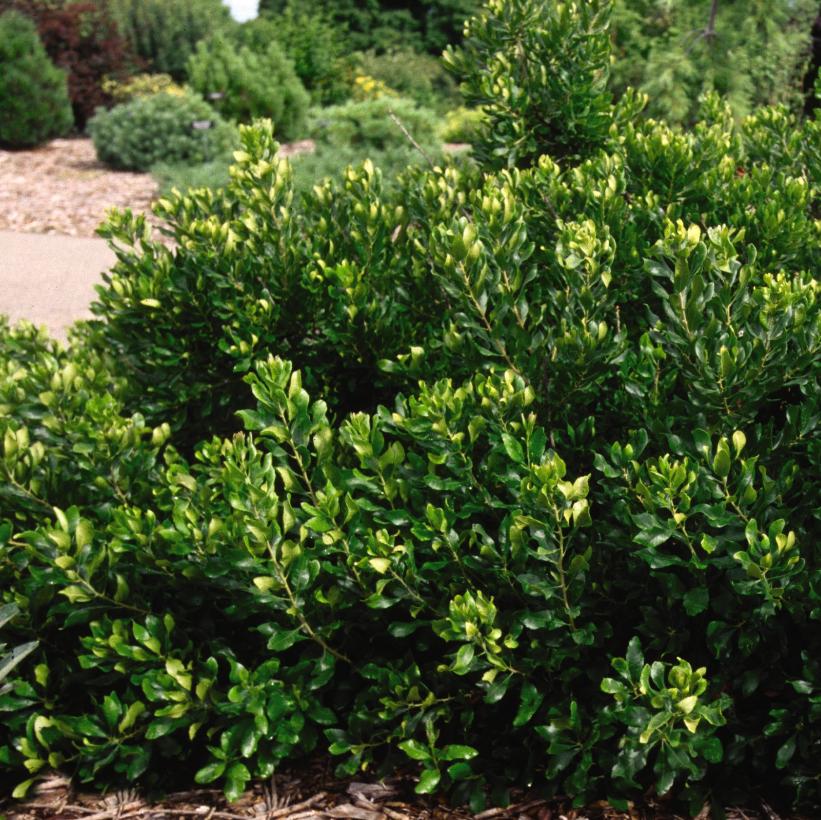 Myrica pensylvanica - Bayberry
ZONE:
3
COLOUR:
Multi-coloured,
Yellow
HEIGHT:
175-200 cm
SPREAD:
175-200 cm
Bayberry grows best in a slightly acidic soil, however, it will tolerate light to heavy soils, and medium to very dry conditions. Also salt-tolerant. Suckering freely, it is excellent for re-naturalization. Use in the woodland garden, shrub border, as a screen or informal hedge. Dioecious: if fruit is desired, it is best to plant several plants, to increase the likelihood of having some males and some females.
The aromatic fruits are used fresh or dried to flavour soups, stews and sometimes put in beer to improve flavour and increase foaming. The dried leaves make a delicate tea. Wax from the fruit's pulp is used in candle making and a fragrant essential oil can be extracted from the fruit. The bark can be used to dye wool.
Larval host for many native moths including the Columbia Silkmoth. The small waxy fruits feed up to 75 species of birds.




