ZONE:
3
COLOUR:
Pink,
White
HEIGHT:
6-7 m
SPREAD:
5-6 m

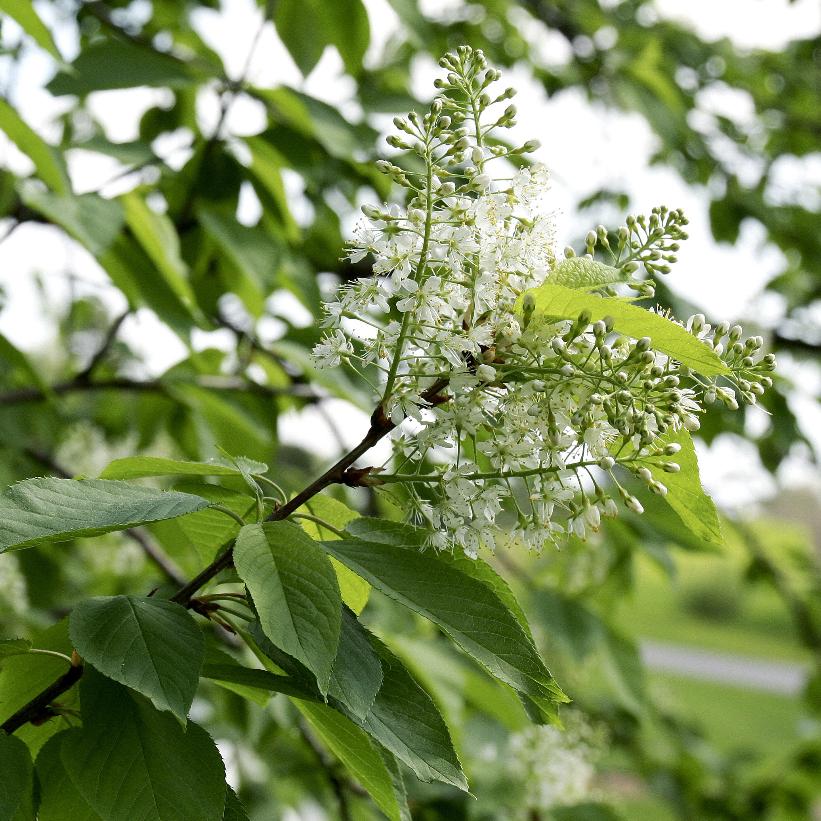 Prunus virginiana - Common Chokecherry
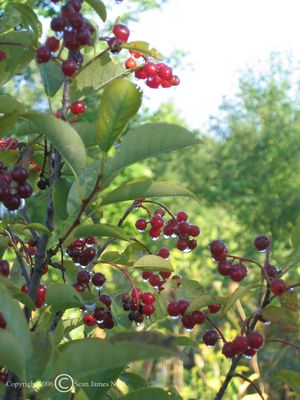 Prunus virginiana - Common Chokecherry - Photo courtesy of Sean James Consulting & Design
ZONE:
3
COLOUR:
Pink,
White
HEIGHT:
6-7 m
SPREAD:
5-6 m
Chokecherry grows best in a semi-dry fertile soil, transplanting easily, and can tolerate a wide range of soil types and conditions. Suckering freely, they will form thickets if suckers are not removed. They can be pruned or trained into a tree form, but still sucker profusely.
Native to Ontario and much of North America.
Although the fruits are edible, they are very sour, hence the name. The seeds contain amygdalin, a product the body converts into cyanide, a deadly poison. It would take many seeds to poison a child.
All parts of the foliage are poisonous to horses, cattle, and sheep.
Larval host for up to 200 species of butterflies. The flowers provide early-season nectar and pollen for bees and other pollinators. The fruit is enjoyed by over 70 species of birds as well as small mammals. In the wild, the twigs are browsed by bears, bighorn sheep, elk, and deer.




